

How Does a Frequency Conversion Wall Hung Boiler Improve Modern Heating?
2026-09-02
As modern buildings place greater emphasis on energy efficiency, stable indoor temperatures, compact installation, and intelligent heating control, the Frequency Conversion Wall Hung Boiler has become an increasingly attractive heating solution. Unlike conventional heating equipment that frequently operates at fixed or stepped output levels, frequency conversion technology allows key components such as pumps or fans to adjust operating speed according to actual heating demand. This helps reduce unnecessary energy consumption while maintaining a more stable heating experience. Variable-speed control and wider modulation ranges are already widely used in modern wall-hung boiler designs to improve efficiency, comfort, and operating performance.
For residential projects, commercial buildings, and customized heating applications, Shandong Baedin Electric Appliance Co., Ltd. provides solutions designed around different installation conditions and customer requirements. One particularly valuable advantage is its support for customized boiler solutions based on different ship types, helping meet the specialized space, heating-load, installation, and operating requirements of marine applications.
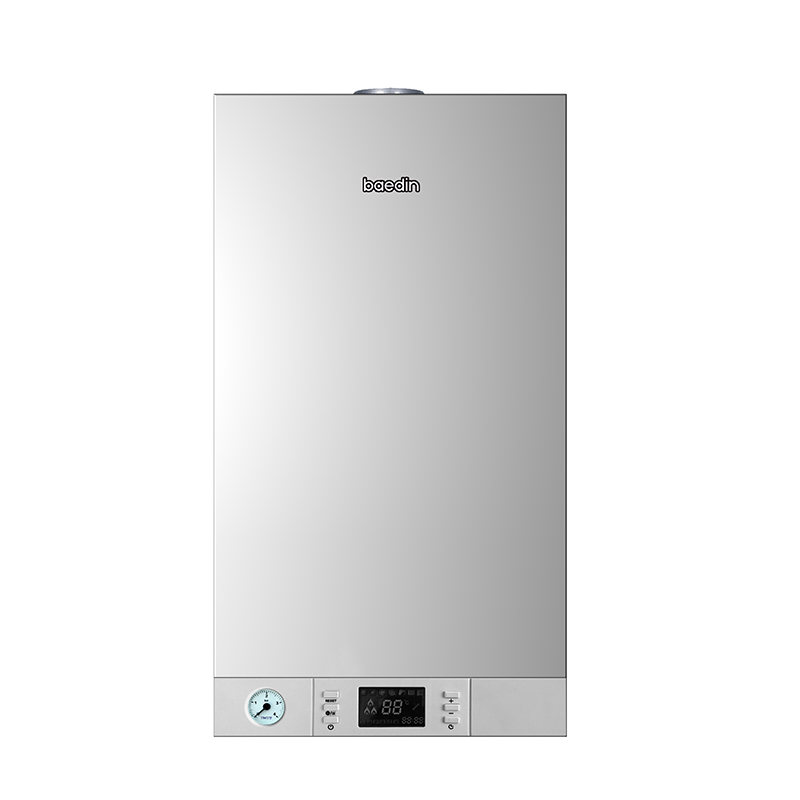
What Is a Frequency Conversion Wall Hung Boiler?
A Frequency Conversion Wall Hung Boiler is a compact heating appliance that uses variable-frequency or variable-speed control to regulate its operating components according to real-time demand.
Instead of simply switching between maximum output and shutdown, the system can adjust operating speed and heating capacity more flexibly. In practical applications, this can help reduce frequent starts and stops, improve temperature stability, and optimize energy use.
The importance of modulation is supported by heating-system research: boilers capable of operating effectively at partial load can achieve better seasonal efficiency, while variable-flow pumps can reduce electricity consumption.
How Frequency Conversion Technology Works
The basic operating process can be understood as:
-
Temperature detection – Sensors monitor water temperature, return-water conditions, or other operating parameters.
-
Demand calculation – The control system evaluates the current heating requirement.
-
Frequency adjustment – The speed of relevant components is adjusted according to demand.
-
Heat output regulation – The boiler supplies an appropriate amount of heat rather than continuously operating at maximum capacity.
-
Continuous feedback – Sensors continue monitoring conditions and the system makes further adjustments.
This dynamic control approach can provide a smoother heating response and help avoid unnecessary energy use.
Why Is Frequency Conversion Important for Heating?
Heating demand is rarely constant. A home may require high heating output during a cold morning, moderate output during the day, and considerably less heat when the indoor temperature approaches the target.
A fixed-output system can therefore waste energy by repeatedly cycling between high output and shutdown. By contrast, a frequency conversion system can better match output with actual demand.
Modern wall-hung boilers commonly combine modulation, electronically controlled pumps, intelligent combustion management, and temperature feedback. For example, some commercial wall-hung condensing boilers offer modulation from 10% to 100%, while other residential models use frequency-controlled pumps to adjust circulation according to system demand.
Key Benefits
| Feature | Practical Benefit |
|---|---|
| Variable-frequency control | Matches operation more closely with heating demand |
| Wide modulation | Helps reduce unnecessary high-output operation |
| Intelligent temperature control | Supports a more stable indoor temperature |
| Frequency-controlled circulation | Helps optimize pump electricity consumption |
| Compact wall-hung design | Saves installation space |
| Flexible customization | Suitable for different application requirements |
| Low-noise operation | Improves comfort in residential environments |
What Results Can Users Expect?
The effectiveness of a Frequency Conversion Wall Hung Boiler is not limited to energy management. Its greatest value is the combination of efficiency, comfort, flexibility, and intelligent operation.
More Stable Heating
When heating output can be adjusted progressively, the system can respond more appropriately to changing thermal loads. This reduces the temperature fluctuations that may occur when conventional equipment frequently starts and stops.
Better Energy Utilization
Frequency conversion allows equipment to operate closer to the actual requirement instead of continuously delivering maximum output. Research on boiler modulation has shown that partial-load performance can have a significant influence on seasonal efficiency.
Lower Electrical Consumption
If a frequency-controlled circulation pump is integrated into the system, pump speed can be adjusted according to hydraulic demand. Modern boiler products already use this approach to reduce pump electricity consumption.
Quieter Operation
Variable-speed operation can also help reduce unnecessary high-speed operation. Modern wall-hung boiler products increasingly emphasize low-noise designs, with some systems achieving sound levels around 40–45 dB under specified conditions.
How Does Customization Make the Boiler More Versatile?
One of the key advantages offered by Shandong Baedin Electric Appliance Co., Ltd. is the ability to support customized solutions rather than relying solely on standardized equipment.
This is especially important when the boiler is intended for specialized environments. Different customers may have different requirements for:
-
Heating capacity
-
Installation dimensions
-
Control systems
-
Voltage and frequency
-
Water circulation configuration
-
Heat-exchange requirements
-
Housing and appearance
-
Connection interfaces
-
Safety configuration
-
Operating environment
A customized design can help the equipment fit the actual application instead of forcing the application to adapt to a standard product.
Why Is Ship-Type Customization a Major Advantage?
For marine applications, equipment selection can be considerably more demanding than ordinary residential installation. Different ship types can have different available spaces, heating loads, power conditions, operating environments, and installation layouts.
Therefore, the ability to customize a Frequency Conversion Wall Hung Boiler according to different ship types can be a significant competitive advantage.
Customized Solutions for Different Ship Types
Shandong Baedin Electric Appliance Co., Ltd. can support project-oriented customization according to the specific requirements of different vessels, such as:
| Customization Area | Possible Requirement |
|---|---|
| Ship type | Passenger vessels, workboats, service vessels and other vessel applications |
| Installation | Compact wall-mounted configuration |
| Heating capacity | Adapted to the vessel's heating demand |
| Power system | Designed around project electrical requirements |
| Dimensions | Optimized for restricted onboard spaces |
| Control | Customized control and monitoring requirements |
| Piping | Adapted to the planned heating-water system |
| Appearance | Customized housing or product configuration |
The main value is application adaptability. Instead of providing a one-size-fits-all boiler, a customized approach can consider the vessel's available installation area, heating requirements, operating conditions, and system integration needs.
For shipbuilders, marine equipment suppliers, and engineering contractors, this flexibility can simplify project planning and make the heating system easier to integrate into the overall vessel design.
Frequency Conversion Wall Hung Boiler vs. Conventional Boiler
The difference becomes clearer when the two approaches are compared:
| Aspect | Conventional Boiler | Frequency Conversion Wall Hung Boiler |
|---|---|---|
| Output control | Fixed or stepped | Variable and responsive |
| Heating adjustment | Less flexible | More precise |
| Partial-load operation | Can be less efficient | Better suited to changing demand |
| Pump control | Often fixed-speed | Can use variable-speed control |
| Temperature stability | May fluctuate | Generally more consistent |
| Energy management | Basic | Intelligent and demand-oriented |
| Customization | Usually model-based | Can be project-oriented |
| Marine applications | Limited flexibility | Better potential for ship-type customization |
The exact performance of any boiler still depends on system design, installation quality, operating conditions, and component configuration. Frequency conversion should therefore be viewed as part of an integrated heating solution rather than a standalone guarantee of a specific energy-saving percentage.
Why Choose Shandong Baedin Electric Appliance Co., Ltd.?
For customers seeking more than a standard heating appliance, Shandong Baedin Electric Appliance Co., Ltd. focuses on combining heating technology with practical customization.
Its Frequency Conversion Wall Hung Boiler solutions can be developed around different application requirements, making them suitable for projects where compact construction, intelligent regulation, energy-conscious operation, and flexible integration are important.
Most importantly, the ability to support customization for different ship types provides additional value for marine projects. Customers can discuss their vessel type, heating requirements, available installation space, electrical conditions, and other technical parameters to develop a more suitable solution.
Frequently Asked Questions
Is a Frequency Conversion Wall Hung Boiler suitable for residential heating?
Yes. Its compact structure, variable operation, and intelligent control make this type of boiler suitable for residential heating applications where stable temperature and efficient operation are important.
Can the boiler be customized for marine applications?
Yes. Shandong Baedin Electric Appliance Co., Ltd. supports customized solutions according to different ship types and project requirements, including installation space, heating capacity, control requirements, and system configuration.
Does frequency conversion reduce energy consumption?
It can improve energy utilization by allowing operating components to adjust their output or speed according to actual demand. However, actual energy savings depend on the complete system design and operating conditions.
Why is modulation important?
Heating loads change continuously. A wider modulation range allows a boiler to operate at lower output when demand decreases, helping reduce unnecessary cycling and improve seasonal performance.
What should buyers consider before selecting a customized model?
Buyers should consider heating capacity, installation dimensions, power supply, control requirements, water circulation, operating environment, safety requirements, and—in marine projects—the specific ship type and available installation space.
Conclusion
A modern Frequency Conversion Wall Hung Boiler is more than a compact heating device. Through variable-speed regulation, intelligent control, and flexible output adjustment, it can provide a more responsive approach to changing heating requirements while supporting efficient and comfortable operation.
For projects with specialized installation requirements, customization becomes equally important. Shandong Baedin Electric Appliance Co., Ltd. combines frequency conversion technology with flexible project-oriented solutions, including the important capability to customize boiler configurations for different ship types. This makes it a valuable option for residential, commercial, and marine heating projects requiring compact design, reliable performance, intelligent regulation, and application-specific engineering.
If you are looking for a Frequency Conversion Wall Hung Boiler tailored to your heating system, vessel type, installation environment, or project specifications, contact us at Shandong Baedin Electric Appliance Co., Ltd. to discuss your requirements and develop a suitable customized heating solution.