

How Does Stainless Steel Construction Fit Into Modern Egg Cooker Design?
2026-10-19
A product designer is reviewing the bill of materials for a new Egg Cooker. The current model uses a polypropylene inner tray and a plastic lid. The retail price is $19.99, and the gross margin is 28 percent. The marketing team wants to introduce a premium version with a stainless steel inner tray and lid. The designer calculates the material cost increase: $2.80 per unit. The retail price would need to increase to $29.99 to maintain the margin. The question is whether the market will pay the premium. The answer depends on how the stainless steel construction is designed and communicated. This guide explains the role of stainless steel in modern egg cooker design and how to balance the cost and the benefit.
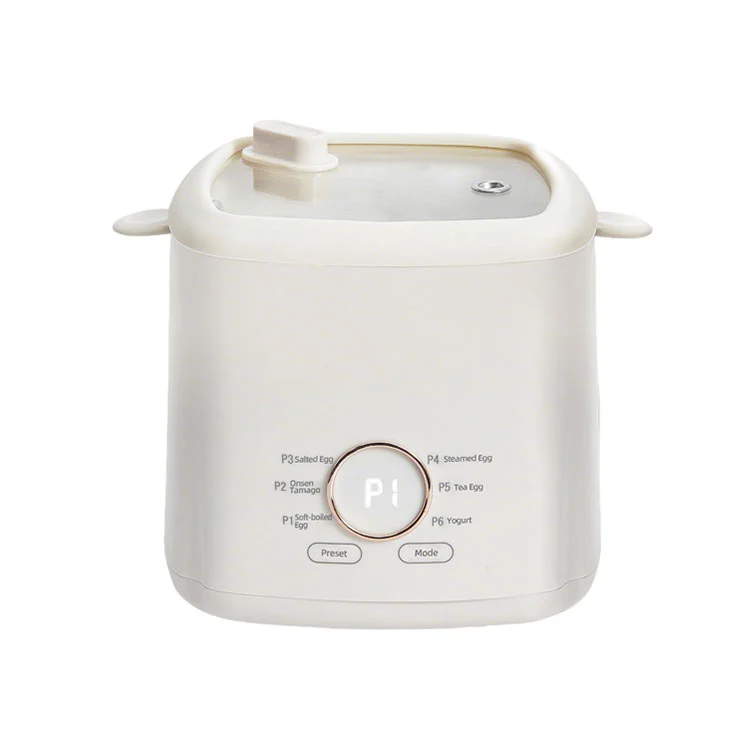
1. Why Does Stainless Steel Replace Plastic in Egg Cooker Interiors?
The interior of an Egg Cooker is exposed to steam, heat, and egg residues. Plastic interiors, typically made from polypropylene or ABS, can degrade over time. The heat and steam cause the plastic to become brittle, and the egg residues can stain or harbor bacteria if the surface is scratched. Stainless steel offers three advantages. First, it is resistant to heat and steam. It does not degrade or become brittle. Second, it is non-porous and does not harbor bacteria. Third, it is easy to clean and does not retain odors. The table below compares the properties of plastic and stainless steel for egg cooker interiors.
| Property | Polypropylene (PP) | Stainless steel 304 |
| Maximum continuous temperature | 100°C | 800°C |
| Heat distortion temperature | 90 – 105°C | N/A |
| Bacterial resistance | Moderate (if scratched) | Excellent |
| Odor retention | Moderate | None |
| Dishwasher safe | Yes (top rack) | Yes |
| Material cost index | 1.0 | 3.5 – 4.5 |
In our factory, we manufacture Egg Cooker units with both plastic and stainless steel interiors. The stainless steel version is positioned as a premium product for health-conscious consumers and for commercial use. Foshan TEH Electric Appliance Co., Ltd. has been manufacturing egg cookers for over 12 years and provides material selection guidance for our customers.
2. Which Stainless Steel Grade Is Suitable for Egg Cooker Construction?
There are two grades of stainless steel commonly used in small appliances: 304 and 430. Grade 304 contains 18 percent chromium and 8 percent nickel. It has excellent corrosion resistance and formability. Grade 430 contains 16 percent chromium and no nickel. It has good corrosion resistance in mild environments but is less resistant to chlorides. Grade 304 is the preferred choice for food contact surfaces because it is more resistant to staining and corrosion. The table below compares the two grades.
| Property | Stainless steel 304 | Stainless steel 430 |
| Chromium content | 18% | 16% |
| Nickel content | 8% | 0% |
| Corrosion resistance | Excellent | Good (mild environments) |
| Formability | Excellent | Moderate |
| Magnetic | No | Yes |
| Relative cost | 1.3 – 1.5 | 1.0 |
For the inner tray and the lid, we recommend grade 304. The additional cost is 30 to 50 percent compared to grade 430, but the corrosion resistance and the appearance are superior. For the outer housing, grade 430 is acceptable because it is not in direct contact with food. In our factory, we use 304 for all food contact surfaces and 430 for the outer housing on our stainless steel Egg Cooker models. Foshan TEH Electric Appliance Co., Ltd. provides material certificates for all stainless steel components.
3. How Does Stainless Steel Affect the Manufacturing Process?
Stainless steel requires different manufacturing processes than plastic. The inner tray is formed by stamping or deep drawing. The lid is formed by stamping. The edges are rolled or hemmed to remove sharp corners. The surface is polished or brushed to achieve the desired finish. The table below shows the manufacturing steps for a stainless steel egg cooker interior.
| Manufacturing step | Process | Key control |
| Blank cutting | Laser cutting or stamping | Dimensional accuracy |
| Deep drawing | Hydraulic press with die | Wall thickness uniformity |
| Trimming | CNC trimming | Edge quality |
| Edge rolling | Roll forming | Safe edge radius |
| Surface finishing | Polishing or brushing | Surface roughness (Ra 0.4 – 0.8 µm) |
| Cleaning | Ultrasonic cleaning | Removal of oil and particles |
Product designer's note: The deep drawing process is the most critical step. If the draw ratio is too high, the stainless steel can crack or thin out. We use a draw ratio of 1.8 to 2.2 for the inner tray. The die radius and the lubrication are optimized to prevent cracking. In our factory, we perform a forming simulation before the die is made. This reduces the trial-and-error time and ensures a consistent part.
4. What Are the Cost and Market Positioning Implications?
The stainless steel construction increases the material cost by $2.50 to $3.50 per unit compared to plastic. The manufacturing cost also increases because the stamping and polishing processes are more expensive than injection molding. The total cost increase is $3.00 to $4.50 per unit. To maintain the margin, the retail price must increase by $8 to $12. The table below shows the cost and price comparison for a plastic and a stainless steel egg cooker.
| Cost element | Plastic egg cooker | Stainless steel egg cooker |
| Material cost | $1.80 | $4.60 |
| Manufacturing cost | $2.20 | $3.80 |
| Total cost | $4.00 | $8.40 |
| Retail price | $19.99 | $29.99 |
| Gross margin | 28% | 28% |
The stainless steel version is positioned as a premium product. It appeals to consumers who are concerned about plastic leaching, who want a durable product, and who are willing to pay more for a product that looks and feels more substantial. In our factory, we have seen that the stainless steel Egg Cooker sells well in markets where food safety is a high priority, such as Japan, Germany, and Scandinavia. Foshan TEH Electric Appliance Co., Ltd. can produce both versions on the same production line with minimal changeover time.
Frequently Asked Questions About Stainless Steel Construction in Egg Cookers
Summary for Product Designers and Brand Managers
Stainless steel construction is a viable option for modern Egg Cooker design, particularly for premium models targeting health-conscious consumers. Grade 304 is the preferred material for food contact surfaces, while grade 430 can be used for the outer housing. The manufacturing process requires stamping and polishing, which adds cost but also adds perceived value. The retail price increase of $8 to $12 is justified by the durability, the food safety perception, and the premium appearance. By offering both plastic and stainless steel versions, brands can address different market segments with the same product platform. Foshan TEH Electric Appliance Co., Ltd. has been manufacturing egg cookers for over 12 years and provides full material and manufacturing support for our customers.
Foshan TEH Electric Appliance Co., Ltd. manufactures Egg Cooker units with stainless steel 304 interiors, stainless steel 430 housings, and plastic interiors. We provide material certificates, food contact safety reports, and cooking performance data for all of our products.