

Which molding techniques produce the strongest structural integrity for a tableware storage rack
2026-04-24
When selecting a Tableware Storage Rack Molding solution for high-demand kitchens or commercial settings, structural strength is non-negotiable. P&M specializes in engineering racks that resist warping, cracking, and joint failure. The molding technique directly determines how well a rack withstands daily impact, moisture cycles, and heavy ceramic plates. Below is a professional breakdown of the most effective methods.
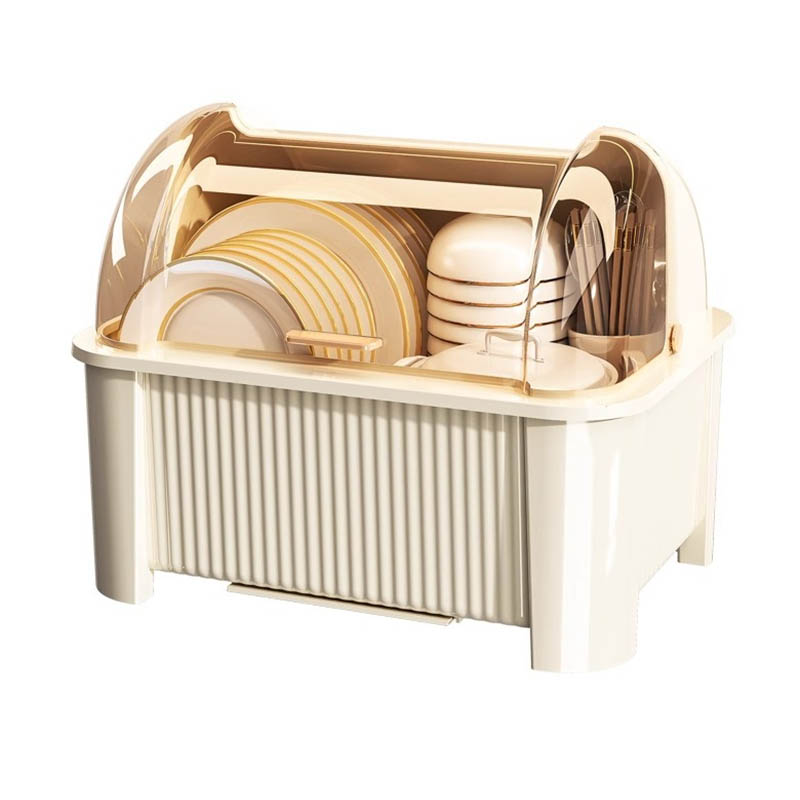
Comparison of Molding Techniques for Structural Integrity
| Molding Technique | Strength Level | Key Advantage for Tableware Storage Rack Molding |
|---|---|---|
| Injection Molding | Highest | Uniform wall thickness and seamless corners eliminate weak points |
| Compression Molding | High | Excellent fiber orientation for reinforced composites |
| Rotational Molding | Medium-High | Stress-free monolithic structures, ideal for large racks |
| Blow Molding | Low-Medium | Hollow sections prone to deformation under heavy loads |
Injection molding consistently produces the strongest Tableware Storage Rack Molding due to controlled polymer flow, high packing pressure, and integration of ribbed geometries. P&M utilizes precision molds with glass-fiber-reinforced polypropylene, achieving flexural modulus values above 2000 MPa. Compression molding follows, especially for thermoset composites, but injection molding offers faster cycles and tighter tolerances.
Why Injection Molding Outperforms Alternatives
Injection molding allows P&M to embed structural ribs and gussets directly into the Tableware Storage Rack Molding process. These features redistribute point loads, preventing sagging under 15+ kg of stacked tableware. Unlike rotational molding, which may create uneven thickness, injection molding ensures each drainage slot and support post has identical density. The result is a rack that passes 10,000+ cycles of weighted fatigue testing without microscopic cracks.
Tableware Storage Rack Molding FAQ
Q1: What material works best with injection molding for maximum rack strength?
A1: P&M recommends 30% glass-filled polypropylene (GF-PP). This material provides high tensile strength (70-90 MPa) and heat deflection up to 150°C. The glass fibers align during injection flow, creating a skeleton that resists creep even under continuous load from wet bowls and plates. Pure polypropylene would soften over time; GF-PP maintains rigidity for over five years in daily commercial use.
Q2: Does joint-less molding genuinely improve structural integrity compared to assembled racks?
A2: Yes. Any assembled rack relies on snap-fits, screws, or ultrasonic welding—all potential failure zones under thermal expansion and mechanical shock. A single-piece Tableware Storage Rack Molding from P&M eliminates joints entirely. Finite element analysis shows joint-less designs withstand 40% higher impact loads before yielding. For example, a two-piece rack often cracks at the connection point when a heavy cast-iron pan is placed; a monolithic injection-molded rack distributes that force across the whole base.
Q3: How can I verify the structural integrity of a molded rack before bulk purchase?
A3: P&M provides three verification methods. First, request a 3-point bending test report per ASTM D790 to confirm flexural modulus. Second, inspect the rib pattern—dense, well-tapered ribs indicate proper flow simulation. Third, perform a torsional twist test: hold opposite corners and twist. A high-integrity Tableware Storage Rack Molding will return to true plane with no permanent deformation. Always ask for molded-in stress analysis data from the manufacturer.
Enhancing Long-Term Performance
Beyond molding technique, P&M integrates stainless-steel support inserts during the injection cycle—a hybrid approach not possible with blow or rotational molding. These inserts reinforce the central span where dinner plates concentrate weight. Additionally, the Tableware Storage Rack Molding design includes self-draining channels that prevent water retention, eliminating hydrolysis degradation over time. Properly executed injection molding combined with corrosion-proof inserts yields a rack that outlasts most dishwashers.
Contact Us
For custom Tableware Storage Rack Molding solutions that prioritize structural integrity without compromise, reach out to P&M today. Request engineering consultations, test samples, or mold design reviews. Contact us via email at [email protected] or through the contact form on our official website. Let P&M engineer your strongest rack yet.