

Why Is a PP Bucket-Style Tamper-Evident Food Container Essential for Safe Food Packaging?
2026-10-21
Food packaging plays a vital role in protecting product quality, maintaining hygiene, and building consumer confidence. For food manufacturers, takeaway businesses, catering companies, and food distributors, choosing the right container is essential for efficient storage and reliable delivery. A PP bucket-style tamper-evident food container offers a practical solution by combining durable polypropylene material, convenient bucket-shaped storage, and a tamper-evident closure design. These features help protect packaged food during handling, transportation, and retail distribution while supporting a professional presentation. For businesses seeking dependable food packaging solutions, Tianjin Jiekang Kitchenware Co., Ltd. provides a starting point for exploring packaging options suited to different commercial requirements.
What Makes a PP Bucket-Style Tamper-Evident Food Container Different?
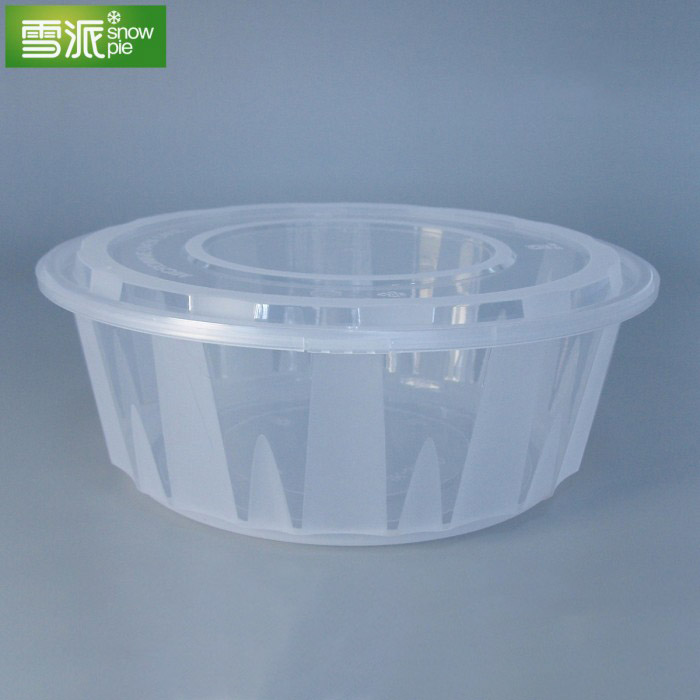
A PP bucket-style tamper-evident food container is designed to provide practical food storage with additional closure security. Unlike ordinary containers that rely only on a standard lid, tamper-evident designs incorporate a feature that indicates whether the original closure has been disturbed.
Polypropylene (PP) is widely used in food packaging because of its lightweight properties, toughness, and versatility in molding. Combined with a bucket-style structure, it offers a convenient format for packaging products that require easy filling, stacking, storage, and dispensing.
Key characteristics may include:
-
Polypropylene construction: Lightweight and durable for everyday packaging and distribution.
-
Bucket-style design: Suitable for holding different food portions and product volumes.
-
Tamper-evident closure: Helps indicate whether the original seal or locking feature has been opened.
-
Practical handling: A wide opening can facilitate filling, inspection, and access to the contents.
-
Commercial presentation: A consistent container shape supports organized storage and retail display.
Actual performance depends on the container's design, lid structure, material specifications, and intended application.
Why Is Tamper-Evident Packaging Important for Food Businesses?
Food safety and consumer trust are important considerations throughout the food supply chain. From production facilities to retail shelves, packaged products may pass through multiple handling stages. A reliable closure system helps businesses manage packaging integrity and provide customers with visible signs of possible interference.
1. Supporting Product Integrity
A tamper-evident feature helps users identify whether a designated closure has been disturbed after packaging. This is particularly useful when products travel through distribution networks or are handled by multiple parties.
However, tamper evidence should not be confused with a guarantee of food safety. Appropriate manufacturing hygiene, storage conditions, and handling procedures remain essential.
2. Improving Consumer Confidence
Consumers generally expect packaged food to arrive in its original condition. A visible tamper-evident feature can provide reassurance that the packaging has not been opened since its intended closure, provided the feature is properly designed and used.
For brands selling prepared foods, sauces, snacks, or other packaged products, this added indication can contribute to a more professional customer experience.
3. Supporting Distribution and Retail Operations
A bucket-style container can simplify product handling in warehouses, food service facilities, and retail environments. Its shape may support organized stacking and storage when the specific design permits it.
The combination of convenient access and a tamper-evident closure can also help businesses establish consistent packaging procedures across production and distribution.
How Does a PP Bucket-Style Tamper-Evident Food Container Work?
The container generally consists of a molded PP body and a compatible lid featuring a tamper-evident mechanism. Depending on the design, the closure may incorporate a breakable ring, locking tab, or another feature that visibly changes when the lid is first opened.
The typical packaging process includes the following steps:
-
Fill the container: Place the prepared food or other suitable product into the clean container according to the required filling procedure.
-
Apply the lid: Position the compatible lid correctly to establish the intended closure.
-
Engage the tamper-evident feature: Secure the locking mechanism according to the manufacturer's instructions.
-
Inspect the closure: Check that the lid is properly fitted and the tamper-evident feature is intact.
-
Store and distribute: Handle the packaged product under the recommended storage and transportation conditions.
For businesses handling food products with specific temperature, moisture, or leakage requirements, the complete packaging system should be tested under representative operating conditions.
Which Food Applications Are Suitable for This Container?
The versatility of polypropylene packaging makes bucket-style containers a potential choice for a range of food applications. Suitability depends on container capacity, wall thickness, lid design, food characteristics, and applicable food-contact requirements.
| Food Application | Potential Packaging Benefits |
|---|---|
| Sauces and condiments | Convenient storage and controlled access |
| Pickled vegetables | Practical container format for suitable prepared foods |
| Snacks and dry ingredients | Organized storage and convenient handling |
| Prepared foods | Suitable packaging options for selected food portions |
| Dairy-based products | Potential use when material and temperature requirements are met |
| Catering and food service | Convenient transport and storage for compatible products |
Before selecting a container, buyers should confirm whether it is suitable for the specific food type, filling temperature, storage duration, and transportation environment. Not every PP container is appropriate for hot filling, freezing, microwave use, or direct food contact under every condition.
PP Bucket-Style Containers vs. Ordinary Food Containers
Choosing between a standard food container and a tamper-evident design requires an understanding of the product's distribution and security requirements.
| Comparison Factor | Standard Food Container | Tamper-Evident PP Bucket-Style Container |
|---|---|---|
| Closure indication | May not visibly indicate first opening | Designed to show evidence of closure disturbance |
| Material options | Varies by product | Polypropylene construction |
| Handling convenience | Depends on shape and lid | Bucket-style format supports practical handling |
| Product presentation | Depends on packaging design | Can communicate a more security-conscious packaging approach |
| Typical priority | General storage and packaging | Storage combined with visible tamper evidence |
A standard container may be sufficient for internal storage or applications where tamper indication is unnecessary. A tamper-evident option can be more appropriate when the packaging must communicate whether its original closure has been disturbed.
Importantly, tamper-evident packaging does not automatically provide an airtight, leakproof, or hermetic seal. Those performance characteristics must be verified separately.
What Should Buyers Consider Before Purchasing?
Selecting a suitable PP bucket-style tamper-evident food container requires more than comparing unit prices. Procurement teams should evaluate the container against their production processes, food requirements, and distribution needs.
Essential Purchasing Checklist
-
Capacity and dimensions: Select a volume and shape compatible with the product and filling equipment.
-
Material specifications: Confirm the PP grade and relevant food-contact compliance documentation.
-
Closure performance: Evaluate lid fit, locking reliability, and the visibility of the tamper-evident feature.
-
Temperature resistance: Verify suitability for the intended filling, storage, and transportation temperatures.
-
Stackability: Check whether filled containers can be stacked safely and efficiently.
-
Customization: Determine whether available options include different sizes, colors, lid designs, or branding features.
-
Supply consistency: Assess production capacity, quality-control procedures, lead times, and minimum order quantities.
-
Cost efficiency: Consider the total packaging cost, including transportation, storage, filling efficiency, and potential product losses.
Requesting product samples and technical documentation before placing a large order can help buyers assess whether a packaging solution meets their operational expectations.
How Can the Right Container Improve Packaging Efficiency?
A well-matched container can contribute to more efficient filling, storage, and distribution. Lightweight PP construction may help reduce packaging weight compared with some heavier alternatives, while a suitable bucket shape can simplify handling and warehouse organization.
A properly designed tamper-evident closure can also support standardized inspection procedures. When workers can quickly check whether the intended closure remains intact, businesses may find it easier to incorporate packaging checks into routine quality-control workflows.
For food manufacturers and distributors, these benefits should be evaluated alongside durability, material usage, product protection, and total operating costs. The most effective packaging solution is one that balances security, convenience, compliance, and value rather than focusing on a single feature.
Why Consider Tianjin Jiekang Kitchenware Co., Ltd.?
For businesses sourcing food packaging products, finding a supplier that understands commercial requirements is an important part of the purchasing process. Tianjin Jiekang Kitchenware Co., Ltd. can be approached to discuss requirements for a PP bucket-style tamper-evident food container and identify suitable product options.
When evaluating potential solutions, buyers should communicate their required capacity, intended food application, closure preferences, target market, and any relevant food-contact standards. These details help clarify whether a proposed container matches the intended use.
Businesses interested in customized packaging should also confirm the available specifications, sample arrangements, customization scope, quality-control procedures, and production lead times directly with the supplier.
Frequently Asked Questions
Is a PP bucket-style tamper-evident food container reusable?
Reuse depends on the product's design, cleaning requirements, and manufacturer's instructions. If the tamper-evident feature is broken during opening, the original tamper indication generally cannot be restored. Reuse should only be considered when the container is explicitly designed and approved for it.
Does PP packaging guarantee food safety?
No. Food safety depends on the material's suitability for the intended food contact, manufacturing quality, sanitation, sealing performance, and proper storage and handling. Buyers should request relevant compliance documentation.
Can these containers be customized?
Customization may be available depending on the supplier's product range and manufacturing capabilities. Buyers should confirm options for capacity, color, lid design, labeling, printing, and other specifications before ordering.
How can buyers verify closure quality?
Buyers can inspect lid compatibility, locking engagement, tamper-evident visibility, and resistance to opening under normal handling conditions. Additional leakage or transportation tests may be necessary for specific products.
Conclusion: Choose Packaging That Supports Confidence and Efficiency
A PP bucket-style tamper-evident food container combines the practical benefits of polypropylene packaging with a bucket-style structure and a closure designed to provide visible evidence of possible interference. For suitable food applications, it can support convenient handling, organized storage, product presentation, and packaging-integrity checks.
The right choice depends on the food being packaged, required capacity, closure performance, regulatory requirements, and distribution conditions. Careful product evaluation helps businesses avoid unnecessary costs while selecting packaging that meets their operational needs.
If you are looking for suitable food packaging solutions for your business, contact us at Tianjin Jiekang Kitchenware Co., Ltd. to discuss your product requirements, explore available container specifications, and identify a packaging option aligned with your purchasing goals.